
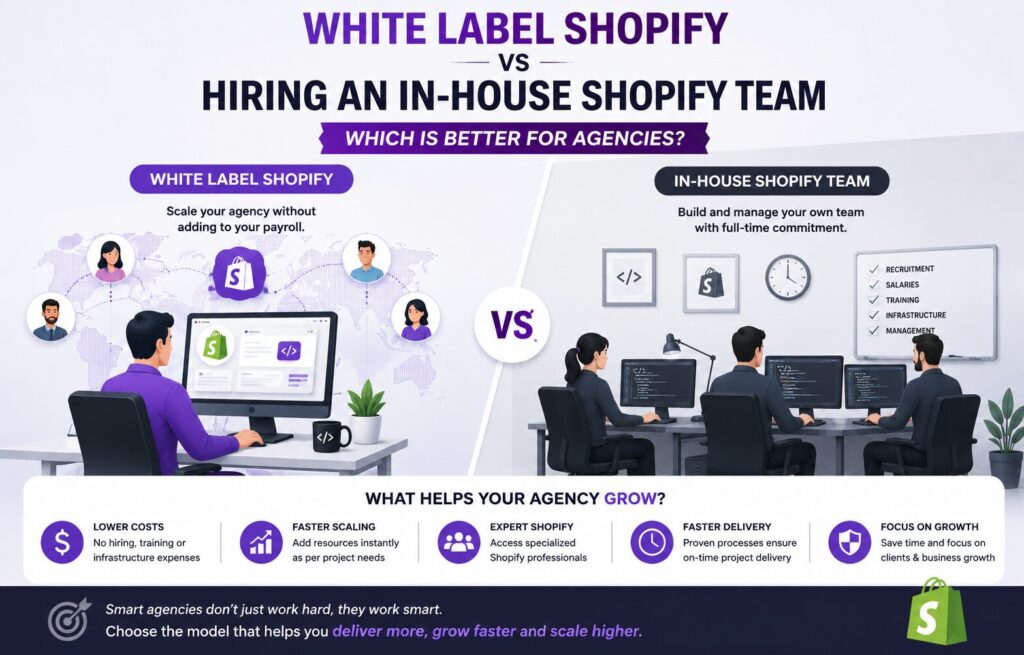
As Shopify continues to dominate the eCommerce industry, agencies are handling more client projects than ever before. While this growth creates exciting opportunities, it also raises an important question:
Should you build an in-house Shopify team or partner with a White Label Shopify development company?
At first glance, hiring developers may seem like the obvious choice. After all, having your own team provides direct control and long-term stability. However, when you look beyond salaries and office expenses, the decision becomes much more strategic.
For many agencies, the right answer isn’t about choosing one over the other. It’s about selecting the model that allows them to scale faster, reduce operational complexity, and consistently deliver high-quality Shopify projects.
Let’s compare both approaches.
The Reality of Building an In-House Shopify Team
Hiring an internal Shopify development team offers several advantages. Developers become familiar with your workflows, communication improves over time, and your company gains complete control over project execution.
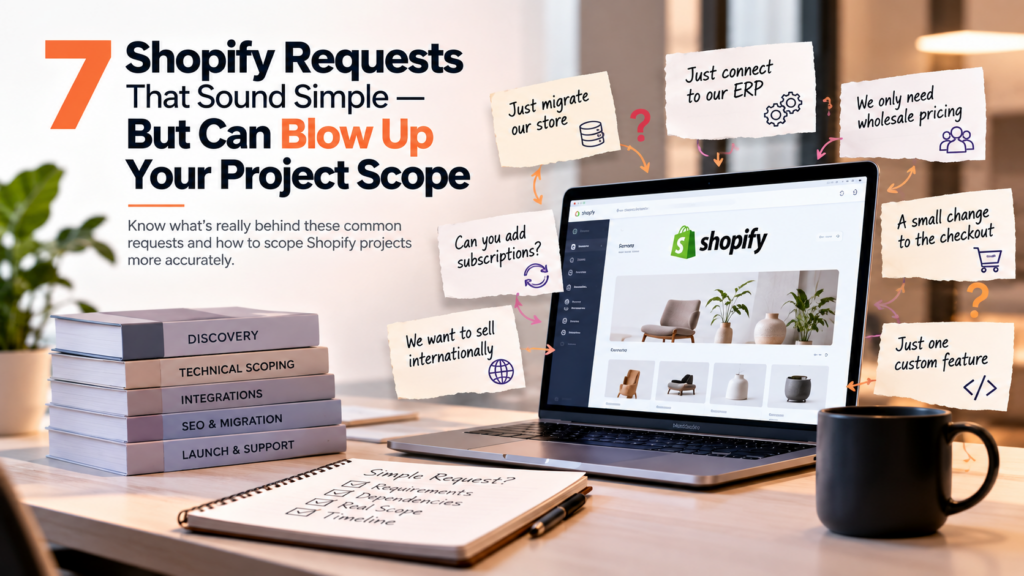
However, building an experienced Shopify team comes with significant challenges.
Recruitment alone can take weeks or even months. Finding developers with expertise in Shopify Plus, Liquid, custom app development, API integrations, performance optimization, and CRO is becoming increasingly competitive. Once hired, agencies must also invest in onboarding, training, salaries, employee benefits, software licenses, and ongoing management.
Another common issue is resource utilization. During slower business periods, you’re still paying the full cost of maintaining the team. During peak seasons, even experienced teams may struggle with capacity, leading to missed deadlines and delayed launches.
An in-house model works well for agencies with a predictable flow of large Shopify projects, but it can become expensive and difficult to scale when workloads fluctuate.
Why More Agencies Are Choosing White Label Shopify Development
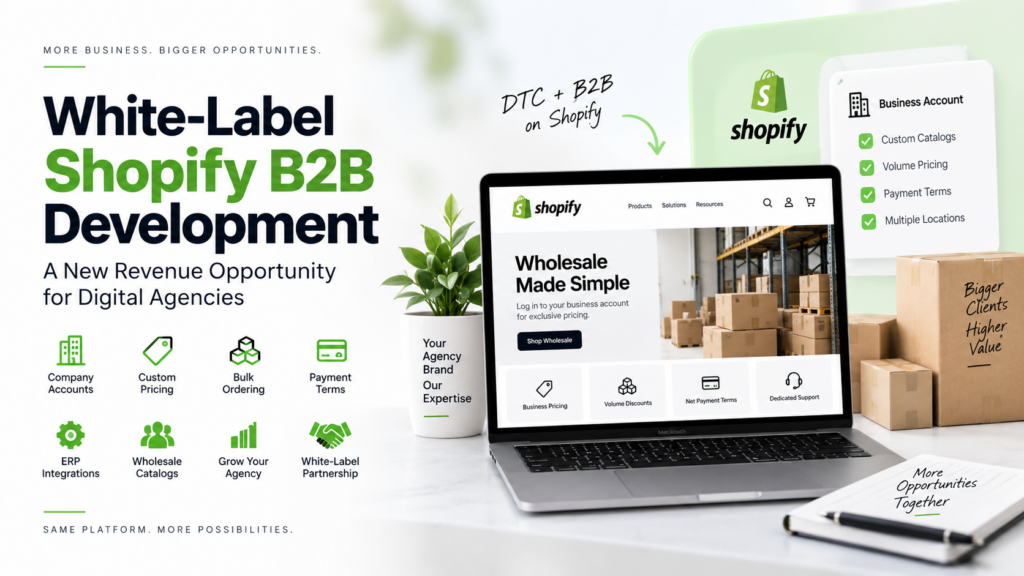
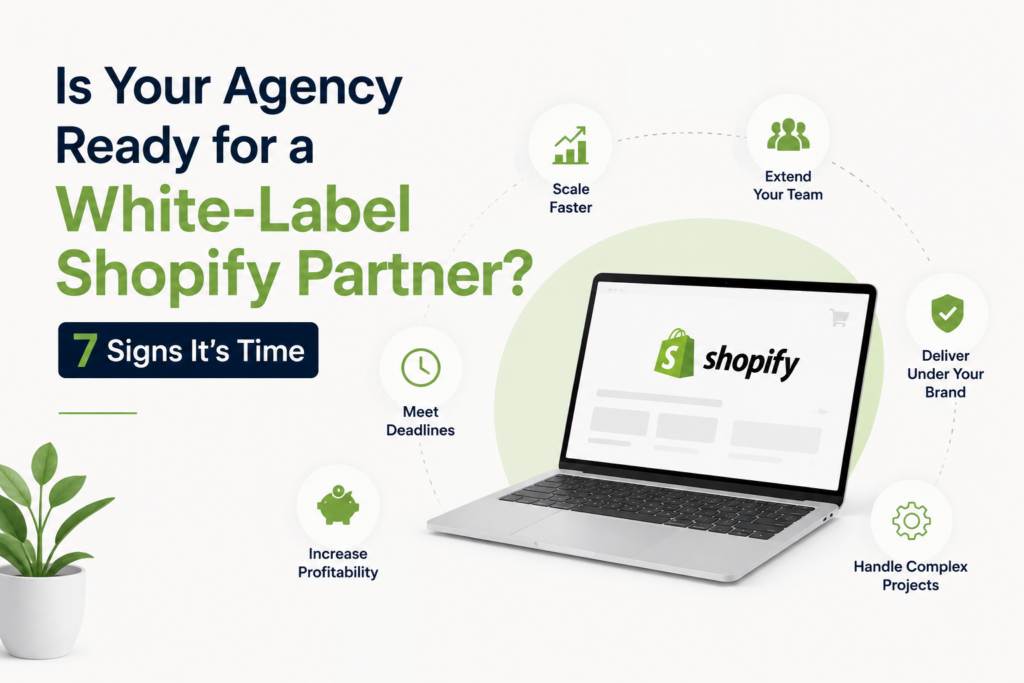
White Label Shopify Development offers agencies a flexible way to increase delivery capacity without increasing internal overhead.
Instead of recruiting new developers for every project, agencies partner with experienced Shopify specialists who work behind the scenes while the agency remains the primary point of contact for clients.
This approach allows agencies to accept more Shopify projects without worrying about hiring delays or resource shortages.
A professional white-label Shopify partner can provide expertise in:
- Custom Shopify Theme Development
- Shopify Plus Solutions
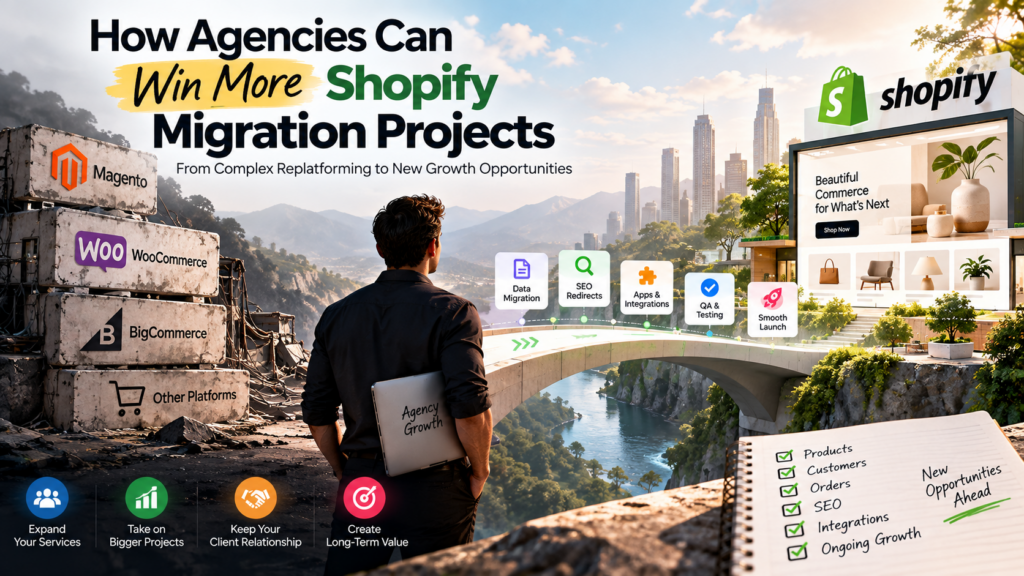
- Store Migration
- Shopify Functions & Custom Apps
- Third-Party API Integrations
- Performance Optimization
- Conversion Rate Optimization (CRO)
- Ongoing Maintenance & Support
Because these teams work exclusively on Shopify projects, they often bring deep technical experience and established development processes that help reduce delivery timelines while maintaining consistent quality.
White Label vs In-House: A Practical Comparison
Choosing between the two models depends on your agency’s growth stage and business goals.
| Factor | In-House Team | White Label Shopify |
|---|---|---|
| Hiring Time | High | None |
| Fixed Costs | High | Low |
| Scalability | Limited | Highly Flexible |
| Technical Expertise | Depends on Hiring | Immediate Access |
| Peak Workload Handling | Challenging | Easy to Scale |
| Client Ownership | Complete | Complete |
| Operational Overhead | High | Minimal |
| Project Turnaround | Moderate | Faster in Most Cases |
The comparison highlights why many growing agencies adopt white-label partnerships, especially when project demand changes throughout the year.
Rather than expanding payroll every time new work arrives, agencies gain access to an experienced Shopify team whenever additional resources are needed.
Which Model Is Right for Your Agency?
There is no universal answer because every agency operates differently.
If your business consistently handles a large volume of Shopify projects with predictable workloads, building an in-house team may provide greater long-term control and stronger internal collaboration.
However, if your agency experiences seasonal demand, rapid growth, or frequently manages multiple client launches at the same time, White Label Shopify Development often delivers greater flexibility and better financial efficiency.
In fact, many successful agencies use a hybrid approach.
Their core strategy, project management, and client communication remain in-house, while trusted white-label Shopify experts handle technical execution, complex integrations, custom development, and overflow projects. This combination allows agencies to grow without sacrificing quality or overextending their internal teams.
Final Thoughts
The debate between White Label Shopify Development Agency and In-House Shopify Agency is no longer about which model is better. It’s about choosing the approach that supports your agency’s long-term growth.
As client expectations continue to rise, agencies need development partners that can deliver quickly, maintain high code quality, and adapt to changing workloads without increasing operational costs.
For many modern agencies, white-label Shopify development has become more than a backup resource. It has evolved into a strategic growth model that enables faster delivery, higher profitability, and stronger client relationships.
Before hiring your next Shopify developer, ask yourself one simple question:
Do you need more employees, or do you need more delivery capacity?
The answer to that question may completely change how your agency scales in the years ahead.